
Are all cryptocurrencies based on blockchain
ICO stands for Initial Coin Offering and refers to a method of raising capital for cryptocurrency and blockchain-related projects. Typically, a project will create a token and present their idea in a whitepaper Neteller Casino. The project will then offer the tokens for sale to raise the capital necessary for funding development. Even though there have been many successful ICOs to date, investors need to be very careful if they are interested in purchasing tokens in an ICO. ICOs are largely unregulated, and very risky.
Cryptocurrency was invented by Satoshi Nakamoto, which is the pseudonym used by the inventor of Bitcoin. Even though digital currency concepts existed before Bitcoin, Satoshi Nakamoto was the first to create a peer-to-peer digital currency that reliably solved the issues facing previous digital money projects. Bitcoin was initially proposed in 2008 and launched in early 2009. Following the invention of Bitcoin, thousands of projects have attempted to imitate Bitcoin’s success or improve upon the original Bitcoin design by leveraging new technologies.
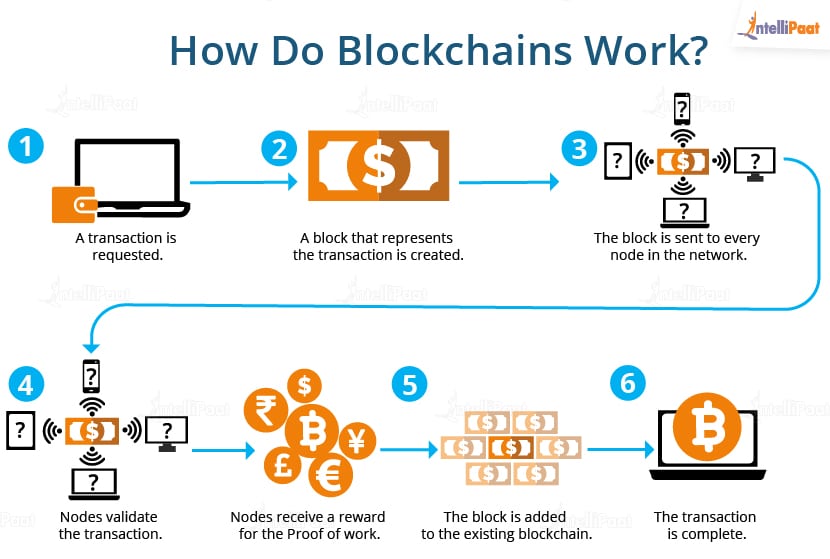
Cryptocurrency mining is the process of adding new blocks to a blockchain and earning cryptocurrency rewards in return. Cryptocurrency miners use computer hardware to solve complex mathematical problems. These problems are very resource-intensive, resulting in heavy electricity consumption.
Do all cryptocurrencies use blockchain
Using blockchain allows brands to track a food product’s route from its origin, through each stop it makes, to delivery. Not only that, but these companies can also now see everything else it may have come in contact with, allowing the identification of the problem to occur far sooner—potentially saving lives. This is one example of blockchain in practice, but many other forms of blockchain implementation exist or are being experimented with.
Bitcoin is a perfect case study of the inefficiencies of blockchain. Bitcoin’s PoW system takes about 10 minutes to add a new block to the blockchain. At that rate, it’s estimated that the blockchain network can only manage about seven transactions per second (TPS). Although other cryptocurrencies, such as Ethereum, perform better than Bitcoin, the complex structure of blockchain still limits them. Legacy brand Visa, for context, can process 65,000 TPS.
Many blockchain networks operate as public databases, meaning anyone with an internet connection can view a list of the network’s transaction history. Although users can access transaction details, they cannot access identifying information about the users making those transactions. It is a common misperception that blockchain networks like Bitcoin are fully anonymous; they are actually pseudonymous because there is a viewable address that can be associated with a user if the information gets out.
Many blockchains are entirely open source. This means that everyone can view its code. This gives auditors the ability to review cryptocurrencies like Bitcoin for security. However, it also means there is no real authority on who controls Bitcoin’s code or how it is edited. Because of this, anyone can suggest changes or upgrades to the system. If a majority of the network users agree that the new version of the code with the upgrade is sound and worthwhile, then Bitcoin can be updated.
The Bitcoin protocol is built on a blockchain. In a research paper introducing the digital currency, Bitcoin’s pseudonymous creator, Satoshi Nakamoto, referred to it as “a new electronic cash system that’s fully peer-to-peer, with no trusted third party.”
All the cryptocurrencies
To add a new coin to Blockspot.io, fill out our submission form with all the necessary details, such as name, ticker, logo, type, supply, and other metadata. The form can be accessed at Submitting a coin to our platform is completely free, and we’ll review your submission before adding it to our extensive database of cryptocurrencies.
A token is a digital asset created on an existing blockchain platform. They represent various types of assets or utilities. Tokens are not native to the blockchain they’re built on and can include utility tokens, security tokens, or non-fungible tokens (NFTs). Examples of tokens are Uniswap (UNI), Binance Coin (BNB) and Chainlink (LINK).
The very first cryptocurrency was Bitcoin. Since it is open source, it is possible for other people to use the majority of the code, make a few changes and then launch their own separate currency. Many people have done exactly this. Some of these coins are very similar to Bitcoin, with just one or two amended features (such as Litecoin), while others are very different, with varying models of security, issuance and governance. However, they all share the same moniker — every coin issued after Bitcoin is considered to be an altcoin.
Price volatility has long been one of the features of the cryptocurrency market. When asset prices move quickly in either direction and the market itself is relatively thin, it can sometimes be difficult to conduct transactions as might be needed. To overcome this problem, a new type of cryptocurrency tied in value to existing currencies — ranging from the U.S. dollar, other fiats or even other cryptocurrencies — arose. These new cryptocurrency are known as stablecoins, and they can be used for a multitude of purposes due to their stability.
These crypto coins have their own blockchains which use proof of work mining or proof of stake in some form. They are listed with the largest coin by market capitalization first and then in descending order. To reorder the list, just click on one of the column headers, for example, 7d, and the list will be reordered to show the highest or lowest coins first.
Coinlore Independent Cryptocurrency Research Platform: We offer a wide range of metrics including live prices, market cap, trading volumes, historical prices, yearly price history, charts, exchange information, buying guides, crypto wallets, ICO data, converter, news, and price predictions for both short and long-term periods. Coinlore aggregates data from multiple sources to ensure comprehensive coverage of all relevant information and events. Additionally, we provide APIs and widgets for developers and enterprise users.
